


Water Coming Through Balcony Into House: Causes, Repairs & Costs Sydney 2026
Last Updated: August 2026
Short Answer:
Why Is Water Coming Through My Balcony Into My House?
Water coming through a balcony into a house can be caused by a failed waterproofing membrane, cracked junctions, drainage problems, door-threshold defects, penetrations, deteriorated sealants or other building-envelope issues.
Water can travel beneath tiles and through building materials before appearing on an internal wall or ceiling, so the visible leak may not identify the original entry point.
The correct repair depends on the cause. Minor localised defects may sometimes be repaired without removing all tiles, while extensive membrane failure may require removal of finishes and installation of a new waterproofing system.
If water is coming through your balcony into your house, appearing on the ceiling below or causing dampness around balcony doors, the problem shouldn’t be ignored.
A leaking balcony can allow water to move behind tiles, through cracks and junctions, around drainage points or through a failed waterproofing system before appearing inside the property.
The difficult part is that where you see the water isn’t necessarily where the leak started.
For Sydney homeowners, apartment owners and strata managers, identifying the actual source of balcony water ingress is therefore critical before deciding how to repair it.
In this guide, Hills Waterproofing explains the common reasons balconies leak into homes, warning signs to look for, whether tiles need to be removed, typical repair costs and what to do when a balcony starts leaking after rain.
Why Is My Balcony Leaking Into the House?
Balconies are exposed to rain and changing weather conditions throughout the year.
A properly designed and constructed balcony system needs to manage this water and direct it toward the appropriate drainage points.
When part of that system fails, water may penetrate into the building.
Common causes include:
- failed waterproofing membranes
- poor drainage
- insufficient or problematic falls
- cracked junctions
- deteriorated sealants
- problems around balcony drains
- door-threshold defects
- penetrations through waterproofed areas
- movement or cracking
- damaged waterproofing
- problems with perimeter detailing
Sometimes more than one defect contributes to the leak.
1. Failed Balcony Waterproofing Membrane
One possible cause of a leaking balcony is failure of the waterproofing system beneath the finished surface.
In many tiled balcony systems, the tiles and grout are not the primary waterproof barrier.
The waterproofing membrane beneath them performs that role.
If the membrane becomes damaged, incorrectly detailed or otherwise fails, water may enter the underlying building structure.
This can eventually result in:
- ceiling stains
- damp walls
- bubbling paint
- mould
- efflorescence
- deterioration of building materials.
2. Balcony Drainage Problems
Waterproofing and drainage work together.
Even a waterproofed balcony can experience problems if water isn’t being managed appropriately.
Potential drainage issues can include:
- blocked outlets
- inadequate drainage
- water ponding
- poorly positioned drains
- problems around drainage connections
- water accumulating near thresholds
If you notice large areas of water remaining on the balcony after rain, this is worth investigating.
3. Water Entering Around Balcony Doors
The junction between an external balcony and an internal living area is particularly important.
Water can potentially enter around:
- door frames
- thresholds
- sliding-door tracks
- adjacent wall junctions
- waterproofing terminations
This is why replacing grout in the middle of a balcony may achieve nothing if the actual source of water ingress is near the balcony door.
4. Cracks and Building Movement
Buildings aren’t completely static.
Concrete, screeds, tiles and other materials can experience movement.
Cracking may occur because of:
- thermal expansion
- settlement
- structural movement
- shrinkage
- substrate movement
A crack visible in the tiled finish doesn’t automatically prove that the waterproofing membrane underneath has failed.
However, cracking can be an important clue during an investigation.
5. Problems Around Penetrations
Anything passing through or connecting with a waterproofed balcony can create a vulnerable location.
Examples include:
- balustrade posts
- pipes
- drainage components
- fixtures
- services
- structural connections
These areas need appropriate waterproofing detailing.
6. Deteriorated Grout or Sealant
Cracked grout or failed sealant is often the first thing homeowners notice.
However, replacing grout shouldn’t automatically be treated as the solution to every balcony leak.
If the underlying waterproofing system has failed, applying new grout or sealant to the surface may only provide temporary improvement—or no improvement at all.
The underlying cause needs to be identified.
Where Does Balcony Water Usually Appear Inside a House?
Balcony leaks can appear in several locations.
Ceiling Below the Balcony
This is particularly common where a balcony sits above:
- a bedroom
- living room
- garage
- another apartment
- entrance area.
Water staining may become more noticeable after prolonged or heavy rainfall.
Around Balcony Doors
You may notice:
- damp carpet
- swollen skirting
- damaged timber flooring
- peeling paint
- water near sliding doors.
This may indicate a problem around the threshold or surrounding waterproofing/building envelope.
Internal Walls
Water can move laterally before becoming visible.
You might therefore find dampness on a wall that doesn’t appear to sit directly beneath the suspected leak.
Apartment Below
In strata buildings, the first indication of a balcony problem may come from the neighbour downstairs reporting a ceiling leak.
This can make determining responsibility and the source of water ingress particularly important.
Why Does My Balcony Only Leak When It Rains?
If the problem appears primarily during or after rainfall, it suggests that external water is entering somewhere within the balcony or surrounding building envelope.
However, this doesn’t automatically mean the membrane itself is responsible.
Possible sources can include:
- waterproofing
- drainage
- balcony doors
- wall junctions
- penetrations
- external sealants
- façade elements.
Heavy wind-driven rain can also expose weaknesses that aren’t obvious during light rainfall.
Why Does the Balcony Leak During Heavy Rain but Not Light Rain?
This is another useful diagnostic clue.
During heavy rain:
- drainage systems handle more water
- ponding may increase
- water levels around thresholds may rise
- wind can drive rain against walls and doors
- small defects may become exposed to significantly more water.
A balcony that only leaks during major storms can still have an important underlying defect.
What Should You Do When a Balcony Starts Leaking?
Step 1: Document the Leak
Take photographs and videos of:
- where water appears
- ceiling stains
- damaged walls
- balcony surface
- drainage areas
- door thresholds
- visible cracks.
If possible, record when the problem occurs.
For example:
“Leak appears approximately 20 minutes after heavy rain begins.”
That information can help during investigation.
Step 2: Reduce Further Internal Damage
Where safe, protect furniture, flooring and belongings from water.
Avoid carrying out unsafe work on wet external surfaces during a storm.
Step 3: Don’t Assume Grout Is the Problem
Regrouting the entire balcony without identifying the leak can waste money and delay the correct repair.
Step 4: Have the Source Investigated
The goal should be to determine the likely water-entry pathway, not simply cover the visible symptom.
Real Hills Waterproofing Project: Leaking Balcony in Rouse Hill
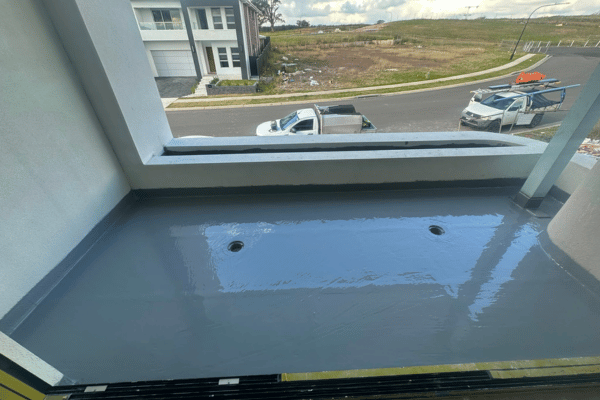
Location: Rouse Hill, Sydney NSW
Project type: Residential waterproofing
Service: Balcony/external waterproofing
Hills Waterproofing has completed residential waterproofing projects in Rouse Hill and throughout Sydney’s Hills District.
Projects involving external waterproofing demonstrate why investigation and preparation are important before membrane application or remedial work begins.
Critical areas can include drainage locations, perimeter junctions, penetrations and transitions between external and internal building areas.
What This Project Shows
The main open floor area isn’t necessarily the most complicated part of balcony waterproofing.
Edges, drains, thresholds and penetrations can require considerably more detailed waterproofing work.
Balcony Waterproofing Project – Castle Hill
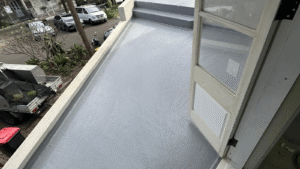
Hills Waterproofing also completes residential waterproofing work throughout Castle Hill and surrounding Hills District suburbs.
The condition of the existing substrate can significantly influence the repair method.
If existing materials need to be removed, the underlying area may reveal:
- cracking
- deteriorated substrate
- failed waterproofing
- problematic junctions
- other defects requiring attention.
Hills Waterproofing Project Insight
One of the biggest mistakes when repairing balcony leaks is choosing the repair method before identifying the cause.
A surface treatment may be appropriate for one problem but completely unsuitable for another.
Can You Fix a Leaking Balcony Without Removing Tiles?
Sometimes.
Whether tiles need to be removed depends on why the balcony is leaking.
A localised problem may potentially be addressed using a targeted repair where technically appropriate.
However, if the waterproofing membrane underneath the tiles has extensively failed, accessing the substrate may require tile removal.
The repair decision should consider:
- extent of membrane failure
- substrate condition
- drainage
- existing tiles
- falls
- thresholds
- penetrations
- source of water ingress.
Read our detailed guide on whether you need to remove tiles to fix a waterproofing leak.
Can You Waterproof Over Existing Balcony Tiles?
In some circumstances, an over-tile waterproofing solution may be considered.
But it isn’t a universal solution.
Before waterproofing over existing tiles, factors such as the condition and adhesion of the tiles, drainage, falls, thresholds, existing defects and compatibility of the proposed system need to be assessed.
Putting a new waterproofing layer over an unidentified underlying problem may simply conceal the defect.
How Much Does It Cost to Fix a Leaking Balcony in Sydney?
The cost depends heavily on the cause and extent of the problem.
Indicative 2026 budgeting ranges may include:
| Balcony Repair | Indicative Sydney Cost |
|---|---|
| Minor/localised waterproofing repair | $500–$1,500+ |
| Small balcony waterproofing | $1,200–$1,800+ |
| Standard balcony waterproofing | $1,500–$3,000+ |
| Large balcony / terrace | $3,000–$5,500+ |
| Complex remedial balcony waterproofing | $3,000–$10,000+ |
| Extensive structural/remedial project | Project-specific quotation |
These figures are indicative only.
The final price may be affected by:
- tile removal
- demolition
- substrate repairs
- balcony size
- drainage
- access
- membrane system
- thresholds
- reinstatement
- extent of existing water damage.
For broader pricing information, see our Waterproofing Cost Sydney 2026: Price Per m² Guide.
Who Pays for a Leaking Balcony in a Strata Building?
This can be complicated.
In an apartment building, responsibility may depend on:
- the strata plan
- whether the relevant element is common property
- location of the waterproofing
- cause of the defect
- renovation history
- applicable strata arrangements.
Don’t assume automatically that the lot owner—or the owners corporation—is responsible.
The source of the leak and ownership/responsibility for the affected building element should be established.
For significant strata leaks, documenting the water damage and obtaining appropriate professional advice can be important.
Does Home Insurance Cover a Leaking Balcony?
It depends on the policy and cause of the damage.
Insurance policies can distinguish between sudden insured events and problems associated with deterioration, maintenance, defective workmanship or gradual water ingress.
Don’t assume either that the claim will be covered or that it will not be covered.
Review your policy and speak with your insurer about the specific circumstances.
Is a Leaking Balcony Dangerous?
Potentially.
Long-term water ingress can contribute to deterioration of building materials and create conditions for mould and other moisture-related problems.
In more serious cases, persistent water penetration may affect building elements beyond the balcony finish itself.
A recurring balcony leak should therefore not be ignored.
Signs You Should Have Your Balcony Investigated
Consider arranging an assessment if you notice:
- repeated ceiling leaks after rain
- spreading water stains
- mould or persistent dampness
- bubbling paint
- efflorescence
- water around balcony doors
- significant cracking
- persistent ponding
- recurring leaks despite regrouting
- deterioration underneath the balcony.
Repeatedly repairing the visible symptom without identifying the source can make the eventual repair more expensive.
Balcony Waterproofing Requirements in NSW
External balcony waterproofing may need to satisfy applicable National Construction Code requirements, project specifications and relevant Australian Standards.
The AS 4654 series relates to waterproofing membranes for external above-ground use and can be relevant to balconies, terraces and similar applications.
The applicable requirements depend on the particular building and project.
For more information, read our Balcony Waterproofing Requirements NSW 2026 guide.
How to Reduce the Risk of Future Balcony Leaks
Once a balcony has been repaired or newly waterproofed:
- keep drainage outlets clear
- investigate unexplained ponding
- monitor cracking
- check deteriorated sealants
- don’t drill through waterproofed areas without appropriate detailing
- address leaks early
- retain waterproofing documentation and photos.
Early investigation can sometimes prevent a relatively localised problem from developing into more extensive water damage.
Frequently Asked Questions
Why is water coming through my balcony into my house?
Possible causes include waterproofing membrane failure, drainage problems, cracks, thresholds, penetrations, deteriorated sealants or other external building defects.
Why is my balcony leaking into the ceiling below?
Water may be passing through or around the balcony waterproofing system before entering the ceiling cavity below. The visible stain doesn’t necessarily identify the original entry point.
Can a balcony leak be fixed without removing tiles?
Sometimes. Localised problems may have targeted repair options, but significant membrane or substrate failure may require tile removal.
Will regrouting stop a balcony leak?
It may help if the problem genuinely relates to the tiled surface or joints, but regrouting won’t repair an extensively failed waterproofing membrane underneath the tiles.
How much does balcony leak repair cost in Sydney?
Minor repairs may cost hundreds to low thousands of dollars, while full remedial balcony waterproofing can cost approximately $3,000–$10,000+ depending on the scope.
Why does my balcony only leak during heavy rain?
Heavy rainfall can overwhelm drainage, increase ponding and expose weaknesses around thresholds, junctions, penetrations or other building elements.
Who should inspect a leaking balcony?
The appropriate professional depends on the suspected cause and complexity of the problem. Waterproofing contractors can assess waterproofing-related issues, while complex building defects may require input from other appropriately qualified building professionals.
Should I repair a balcony leak immediately?
Recurring water ingress should be investigated rather than ignored because ongoing moisture can damage finishes and surrounding building elements.
Leaking Balcony Repair Sydney
If water is coming through your balcony into your home, don’t assume the problem can be solved by simply applying sealant or replacing grout.
Finding the likely source of water ingress is the first step toward selecting an appropriate repair.
Hills Waterproofing provides waterproofing and remedial waterproofing services across Sydney, including:
- leaking balcony repairs
- balcony waterproofing
- remedial waterproofing
- external waterproofing
- waterproofing leak investigation
- bathroom waterproofing
- rooftop waterproofing
- residential waterproofing.
We service Rouse Hill, Castle Hill, Box Hill, the Hills District and suburbs throughout Sydney.
Contact Hills Waterproofing to discuss your leaking balcony and arrange an assessment.
📞 Call us at 0410 570 721
📧 Email: [email protected]
Related Services from Hills Waterproofing
CHECK OUR 5⭐ GOOGLE REVIWE
CHECK OUR 5⭐ GOOGLE REVIWE
GET A FREE QUOTATION
GET A FREE QUOTATION
