
Last updated: November 2026
Your bathroom looks perfectly normal. The tiles are still in place, the shower works, and there are no obvious cracks.
But the paint on the other side of the bathroom wall is bubbling. The skirting boards are swelling, or a damp patch has appeared on the ceiling downstairs.
Could the waterproofing membrane underneath your bathroom tiles have failed?
And more importantly, can bathroom waterproofing be repaired without removing all the tiles?
For Sydney homeowners, this is one of the most important questions to answer before spending money on regrouting, resealing or renovating an entire bathroom.
At Hills Waterproofing, we understand that homeowners want to stop the leak without paying for unnecessary demolition. However, the right repair depends on identifying the source of the water and determining whether the waterproofing membrane itself is defective.
This guide explains how bathroom waterproofing repairs work, when localised repairs may be possible, when membrane replacement is necessary and what Sydney homeowners should check before requesting a quote.
Quick Answer: Can Bathroom Waterproofing Be Repaired Without Removing Tiles?
Sometimes bathroom leaks can be repaired without removing tiles, but a failed waterproofing membrane concealed beneath the tiles may require tile removal to access and rectify the defect.
The appropriate repair depends on the source of the leak, membrane condition, extent of damage and accessibility.
If the issue involves an accessible plumbing connection, deteriorated sealant or another localised defect, a less disruptive repair may be possible.
However, if the waterproofing membrane has failed across a significant area, surface sealing or regrouting will not necessarily restore the concealed waterproofing system.
The first step is to investigate the leak before deciding whether to repair, replace or renovate.
Key Points for Sydney Homeowners
Not every bathroom leak means the membrane has failed.
Regrouting is not the same as replacing waterproofing.
Localised repairs may be possible in suitable circumstances.
Widespread membrane failure may require removing tiles and rebuilding affected sections.
Repeated leaks after previous repairs should be investigated.
An accurate repair quote depends on the actual defect and scope.
What Is Bathroom Waterproofing Repair?
Bathroom waterproofing repair involves identifying and rectifying defects that allow water to escape from areas intended to contain it.
The work can range from a limited repair to complete replacement of the waterproofing system.
Common areas requiring investigation include shower floors, wall-to-floor junctions, floor wastes, pipe penetrations, shower openings and adjoining wet-area surfaces.
Bathroom Waterproofing Repair vs Bathroom Renovation
These are not necessarily the same project.
A bathroom renovation may involve replacing the vanity, tiles, shower screen, fittings and other finishes.
A waterproofing repair focuses on correcting the source of water ingress and restoring the affected waterproofing system.
Some repairs can be relatively contained. Others may require substantial demolition and reinstatement.
The correct scope depends on the condition of the bathroom—not simply its age or appearance.
9 Signs Your Bathroom Waterproofing May Have Failed
Waterproofing membranes are usually concealed, so homeowners often notice the effects of moisture rather than the membrane defect itself.
1. Bubbling or Peeling Paint
Paint that bubbles or peels on the opposite side of a bathroom wall may indicate moisture entering the wall assembly.
2. Damp Walls Beside the Shower
Recurring dampness in an adjoining bedroom, hallway or wardrobe can be a warning sign.
3. Mould That Keeps Returning
Mould may be associated with ventilation, condensation or moisture intrusion. If it repeatedly returns alongside damp materials, further investigation may be necessary.
4. Swollen Skirting Boards
Timber skirting that swells, separates or deteriorates near a bathroom may have been exposed to moisture.
5. Water Stains on the Ceiling Below
An upstairs bathroom leak may first become visible on the ceiling downstairs.
The visible stain does not necessarily identify the exact point where water entered.
6. Loose or Hollow-Sounding Tiles
Loose tiles may indicate a problem with the tiled assembly. However, they do not automatically confirm waterproofing failure.
7. Recurring Shower Leaks
If water damage returns after previous sealing or grout repairs, the underlying cause may not have been resolved.
8. Musty Smells
Persistent damp odours may indicate moisture in concealed materials, although other causes are possible.
9. Damaged Flooring Outside the Bathroom
Swollen flooring or moisture appearing near the bathroom doorway may suggest water is escaping beyond the wet area.
Noticing several of these symptoms? Call Hills Waterproofing on 0410 570 721 to discuss your bathroom waterproofing problem.
Why Does Bathroom Waterproofing Fail?
A bathroom membrane can become defective for several reasons.
Inadequate Surface Preparation
Waterproofing systems require suitable substrates.
If the underlying surface is contaminated, damaged or improperly prepared, the membrane may not perform as intended.
Incorrect Membrane Application
Problems may occur when a waterproofing system is not installed according to the relevant product requirements, including preparation, application and curing.
Poor Junction Detailing
Corners and wall-to-floor junctions require particular attention because they connect different surfaces and may be affected by movement.
Defects Around Floor Wastes
Floor wastes are critical interfaces between waterproofing and drainage components.
Inappropriate detailing can create pathways for water ingress.
Plumbing Penetrations
Waterproofing around pipes and other penetrations needs to be compatible with the complete system.
Building Movement
Movement in substrates, junctions or other building elements can affect waterproofing performance.
Previous Incomplete Repairs
A surface treatment may temporarily reduce visible water entry without correcting the concealed defect.
The important point is that different causes require different repairs.
Can You Repair Bathroom Waterproofing Without Removing Tiles?
This depends on the actual problem.
| Problem identified | Could tiles remain? | What may be required |
|---|---|---|
| Accessible plumbing leak | Often | Plumbing repair |
| Deteriorated accessible sealant | Sometimes | Appropriate joint repair |
| Damaged grout | Sometimes | Grout repair, if that is the relevant defect |
| Localised accessible waterproofing defect | Possibly | Compatible targeted rectification |
| Failed membrane beneath tiles | Often requires removal | Access and membrane repair or replacement |
| Widespread waterproofing failure | Usually substantial removal | Broader waterproofing reconstruction |
| Unconfirmed source | Unknown | Investigation before selecting a repair |
These are general scenarios, not a substitute for inspecting the actual bathroom.
When Tile Removal May Be Avoided
If investigation identifies an accessible defect that can be corrected without disturbing the concealed membrane, the repair may not require removing tiles.
When Tile Removal May Be Necessary
If the membrane beneath the tiled surface needs replacing, access to the waterproofing layer may be required.
This can involve removing tiles, adhesives, screed or other affected materials.
The amount of demolition depends on the existing construction and repair design.
Can Regrouting Fix Failed Bathroom Waterproofing?
Regrouting can be useful when grout is damaged or deteriorated.
However, grout should not be treated as a replacement for a compliant waterproofing membrane system.
A tiled shower is made up of several components, and each performs a different function.
Replacing grout may improve the tiled finish, but it does not automatically correct defects beneath the tiles.
If your shower continues leaking after regrouting, the source should be investigated rather than assuming another grout treatment will solve the problem.
Repair or Replace: Which Option Is Better?
The decision depends on the defect, existing system and extent of damage.
When Localised Repair May Be Suitable
A targeted repair may be considered when the defect is identifiable, accessible and compatible with the surrounding waterproofing system.
The condition of the adjacent membrane is important.
When Membrane Replacement May Be Necessary
More extensive replacement may be required where:
The membrane has widespread defects.
Multiple waterproofing junctions have failed.
The existing system is unsuitable for reliable local repair.
The substrate is damaged.
Previous repairs have not resolved the problem.
The required waterproofing continuity cannot be restored through a limited repair.
What About a Bathroom That Keeps Leaking?
If the bathroom has been repeatedly resealed or regrouted without resolving the problem, continuing the same treatment may not be economical.
A more thorough investigation can help determine whether a different repair approach is required.
How Is a Bathroom Waterproofing Leak Investigated?
Before selecting a repair, the likely source of water should be established.
Depending on the situation, investigation may involve reviewing the history of the leak, examining visible defects, checking plumbing-related possibilities and assessing moisture patterns.
Specialist testing may be appropriate in some circumstances.
Step 1: Understand When the Leak Occurs
Does water appear only when the shower is used?
Does the problem continue even when the bathroom is not in use?
Is the leak associated with a particular fixture?
These details can help narrow the investigation.
Step 2: Examine the Affected Areas
Visible symptoms may include staining, damaged finishes, loose tiles, deteriorated joints or damp materials.
Step 3: Consider Plumbing and Drainage
Not every bathroom leak is a waterproofing failure.
Plumbing connections, waste pipes and drainage components may also need to be considered.
Step 4: Assess the Waterproofing System
Where waterproofing is suspected, the contractor can assess the likely defect and whether further access is required.
Step 5: Determine the Repair Scope
The repair recommendation should follow the findings rather than assuming complete bathroom demolition is always necessary.
What Happens During Professional Bathroom Waterproofing Repair?
The exact process varies, but a larger remedial waterproofing project may involve the following stages.
1. Investigation and Scope Confirmation
The source and extent of the problem are assessed.
2. Removal of Affected Finishes
Where necessary, tiles and other materials are removed to access the defective waterproofing.
3. Substrate Assessment
The exposed substrate is examined for damage, moisture and suitability.
4. Surface Preparation and Repairs
The area is prepared for the selected waterproofing system.
5. Junction and Penetration Detailing
Critical interfaces are treated as required by the system and project.
6. Waterproofing Membrane Installation
The appropriate membrane system is installed according to the relevant specifications and requirements.
7. Curing and Applicable Checks
The system is allowed to cure and undergo any required checks before subsequent finishes are installed.
8. Reinstatement
Tiling and other finishes are reinstated as included in the agreed scope.
Important: Waterproofing and retiling are not automatically included in the same quotation. Always confirm the contractor’s inclusions and exclusions.
How Much Does Bathroom Waterproofing Repair Cost in Sydney?
Bathroom waterproofing repair costs depend on the extent of the defect and the work required.
A limited accessible repair may have a very different cost from replacing a concealed membrane beneath a tiled shower.
The main cost factors include:
Investigation and testing
Bathroom size
Accessibility
Tile removal
Substrate condition
Membrane system
Required detailing
Drying and repairs
Reinstatement of finishes
Why a Repair Quote Can Be Higher Than a New Waterproofing Quote
A new bathroom may already have an exposed substrate ready for waterproofing.
An existing leaking bathroom may require demolition and repairs before membrane installation can begin.
The additional work can make rectification substantially more involved.
For detailed budgeting information, read our Bathroom Waterproofing Cost Sydney 2026 guide.
You can also compare broader rates in our Waterproofing Cost Sydney guide.
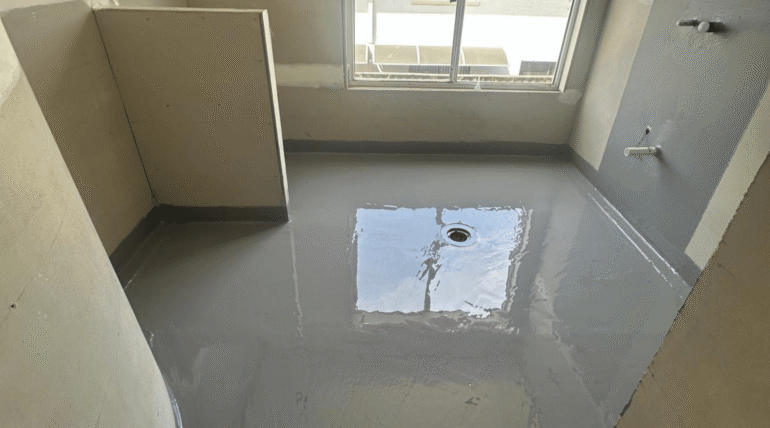
Real Hills Waterproofing Project: Bathroom Membrane Repair in Kellyville, NSW
Hills Waterproofing has published a residential remedial waterproofing project in Kellyville involving both a leaking balcony and a bathroom with failed waterproofing.
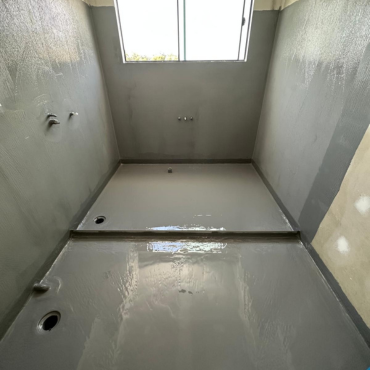
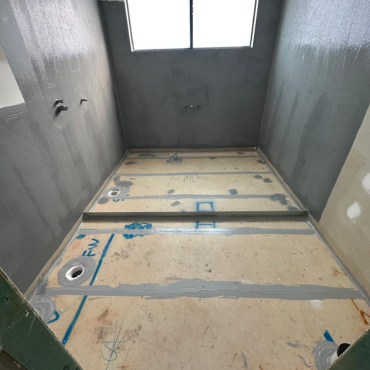
The homeowner reported persistent water ingress, including a bathroom waterproofing problem requiring rectification.
Project Snapshot
Location: Kellyville, NSW
Property: Residential home
Service: Remedial waterproofing
Problems: Leaking balcony and failed bathroom waterproofing
Project focus: Addressing water-ingress defects through remedial waterproofing work
Why This Project Is Relevant
This Kellyville project illustrates an important point: when a bathroom membrane has failed, the solution needs to address the defective waterproofing rather than only the visible signs of moisture.
It also demonstrates that a property can experience different waterproofing problems at the same time, each requiring an appropriate repair scope.
View the real Hills project: Balcony Leak Repair & Bathroom Waterproofing in Kellyville NSW.
Recommended Project Image
Filename: bathroom-waterproofing-repair-kellyville-sydney.jpg
ALT text: Bathroom waterproofing repair project in Kellyville NSW by Hills Waterproofing
Use an actual bathroom photograph from the Kellyville project, rather than a generic waterproofing image.
Another Hills Project: Bathroom Waterproofing Repairs in Dural
Hills Waterproofing has also documented a residential bathroom waterproofing project in Dural, NSW.
The homeowner had experienced water seepage and mould behind bathroom tiles, prompting waterproofing work to address the affected area.
This is relevant to homeowners experiencing recurring dampness or suspected concealed moisture in an existing bathroom.
View the project: Bathroom Waterproofing in Dural NSW.
Using genuine project examples helps homeowners see that Hills Waterproofing has experience with real residential water-ingress problems, not just new membrane installation.
Bathroom Waterproofing Repair in Apartments
Bathroom leaks in apartments can affect more than one property.
Water may appear in an adjoining room, the ceiling of the apartment below or other building elements.
The responsible party depends on factors such as the source of the leak, common property boundaries, previous renovations and the relevant strata arrangements.
Before arranging substantial rectification, apartment owners should clarify any applicable approval and responsibility requirements.
Does Insurance Cover Failed Bathroom Waterproofing?
Insurance coverage depends on the policy and circumstances.
An important distinction may exist between the cost of correcting defective waterproofing and the cost of repairing resulting water damage.
Homeowners should review their policy and speak with their insurer rather than assuming every waterproofing failure is covered.
Bathroom Waterproofing Repair and Australian Standards
Bathroom waterproofing work should meet the requirements applicable to the particular project.
AS 3740 addresses waterproofing of domestic wet areas and is an important reference for relevant bathroom waterproofing work.
Repair methods also need to consider the existing construction, membrane system, substrate and relevant product installation requirements.
A surface treatment should not automatically be considered equivalent to replacing a defective concealed waterproofing system.
When Should You Call a Bathroom Waterproofing Contractor?
Consider arranging an assessment when:
Water damage keeps returning.
The shower leaks despite previous regrouting.
Paint is bubbling on the opposite side of the bathroom wall.
Moisture is appearing in adjoining rooms.
An upstairs bathroom is affecting the ceiling below.
The existing membrane is suspected to have failed.
You’re unsure whether to repair or replace the waterproofing.
If water is near electrical fittings, avoid contact and arrange appropriate urgent electrical assistance. If there is an active plumbing leak, isolate the water supply where safe and contact a plumber.
Why Choose Hills Waterproofing for Bathroom Repairs in Sydney?
Hills Waterproofing provides residential waterproofing and remedial waterproofing services throughout Sydney.
Our work includes bathroom waterproofing, shower waterproofing, membrane installation and waterproofing repairs.
We understand that homeowners want to avoid unnecessary demolition and repeated temporary fixes.
The appropriate solution begins with understanding the problem and determining what waterproofing work is actually required.
Areas We Service
Hills Waterproofing works across the Hills District and greater Sydney, including Castle Hill, Kellyville, Rouse Hill, Box Hill, Baulkham Hills, Dural, Annangrove, Norwest, Parramatta and surrounding areas.
Whether you’re renovating a bathroom or dealing with an existing water leak, contact Hills Waterproofing to discuss your project.
Bathroom Leaking? Request a Waterproofing Repair Quote in Sydney
If your bathroom keeps leaking, don’t continue paying for surface repairs without understanding the underlying problem.
A leaking bathroom may need a localised repair, membrane replacement or another form of rectification.
The right approach depends on the actual cause.
Call Hills Waterproofing on 0410 570 721 to discuss your bathroom waterproofing problem.
You can also visit Hills Waterproofing to request a quote online.
When contacting us, include your suburb, bathroom age, location of the water damage, any previous repairs and photos of the affected areas.
Frequently Asked Questions
Can bathroom waterproofing be repaired without removing tiles?
Sometimes. Accessible defects may be repairable without removing tiles, but replacing a failed membrane beneath the tiled surface may require tile removal.
How do I know if my bathroom waterproofing membrane has failed?
Possible warning signs include recurring damp walls, ceiling stains, bubbling paint and moisture outside the bathroom. These symptoms require investigation because plumbing or other defects can cause similar problems.
Can regrouting stop a leaking shower?
Regrouting can address deteriorated grout, but it does not automatically repair a failed waterproofing membrane beneath the tiles.
Is it cheaper to repair or replace bathroom waterproofing?
A limited repair may cost less initially, but it is only appropriate where the defect and surrounding system allow a reliable repair. Widespread failure may require replacement.
How much does bathroom waterproofing repair cost in Sydney?
Costs vary according to the defect, access, demolition, substrate repairs, membrane replacement and reinstatement. A project-specific quote is the most reliable way to establish the cost.
Does a leaking bathroom always need a full renovation?
No. The necessary scope depends on the source and extent of the defect. Some problems can be addressed with limited work, while others require substantial reconstruction.
Can you waterproof over existing bathroom tiles?
Certain surface-applied systems may be suitable for specific applications, but they should not automatically be treated as a replacement for defective waterproofing beneath tiles. The existing construction and leak source must be assessed.
Why is my bathroom still leaking after resealing?
The leak may originate from a concealed membrane defect, plumbing issue, drainage interface or another location not addressed by the resealing work.
How long does bathroom waterproofing repair take?
The timeframe depends on the repair scope, demolition, drying, preparation, membrane installation, curing and reinstatement. A minor repair and a complete waterproofing replacement can have very different schedules.
Can a bathroom waterproofing leak damage the room next door?
Yes. Escaping water can affect adjoining walls, flooring, skirting and other materials, depending on the construction and source of moisture.
Should I contact a plumber or waterproofing contractor?
If the source is unknown, investigation may be required to determine whether plumbing, waterproofing or another building component is responsible. An active pipe leak generally requires a plumber.
Can Hills Waterproofing repair leaking bathrooms in Sydney?
Hills Waterproofing provides bathroom waterproofing and remedial waterproofing services across Sydney. Contact the team to discuss the symptoms and determine the appropriate next steps.
Final Thoughts: Repair the Cause, Not Just the Visible Leak
A leaking bathroom doesn’t automatically mean the entire room needs demolishing.
But it also doesn’t mean that new grout or silicone will solve the problem.
The most important step is identifying whether the issue involves plumbing, an accessible defect, localised waterproofing damage or widespread membrane failure.
Once the source is understood, the appropriate repair scope can be determined.
Need bathroom waterproofing repair in Sydney? Call Hills Waterproofing on 0410 570 721 or request a quote through our website.
Related Hills Waterproofing Guides
📞 Call us at 0410 570 721
📧 Email: [email protected]
Related Services from Hills Waterproofing
CHECK OUR 5⭐ GOOGLE REVIWE
CHECK OUR 5⭐ GOOGLE REVIWE
GET A FREE QUOTATION
GET A FREE QUOTATION
